
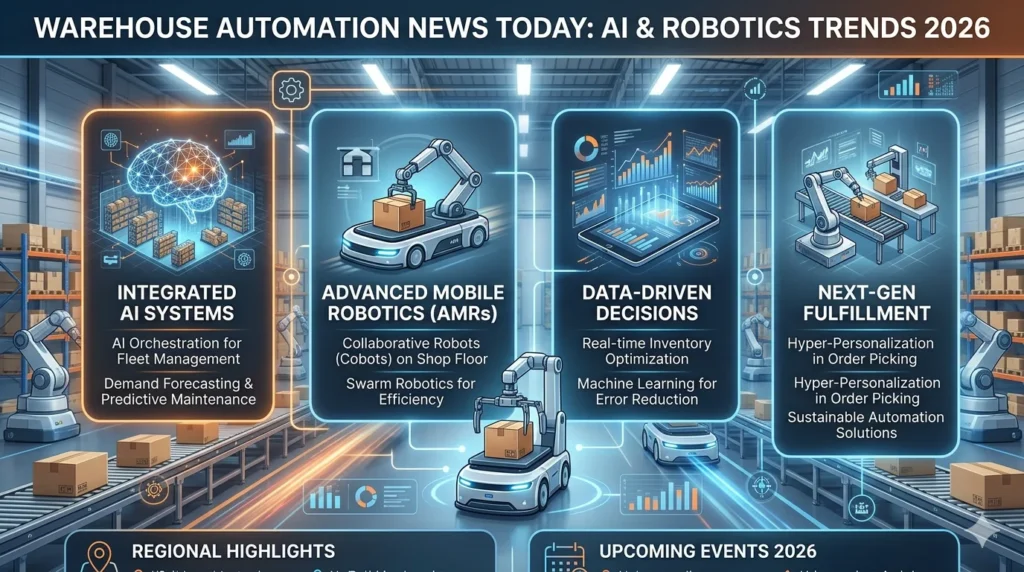
Warehouse automation is changing fast, and many businesses are updating their systems every day. From robots that move products to AI that plans deliveries, modern warehouses are becoming smarter and faster. In this article, we will explore the latest warehouse automation news today, key trends, technologies, and what the future looks like in 2026.
- What Is Warehouse Automation?
- Top Warehouse Automation News Today
- Biggest Warehouse Automation Trends in 2026
- New Technologies Changing Warehouse Operations
- Major Companies Leading Warehouse Automation
- Challenges Facing Warehouse Automation
- How Warehouse Automation Impacts Workers and Businesses
- Future of Warehouse Automation
- FAQ: Warehouse Automation News Today
What Is Warehouse Automation?
Warehouse automation means using machines, software, and robots to help run warehouse tasks with less human effort. These systems are used to move, sort, store, and track products more efficiently.
Many companies now use warehouse management systems (WMS) and warehouse software solutions to control inventory and improve speed. These tools are part of a bigger digital warehouse transformation, where traditional manual work is replaced with smart systems.
How Warehouse Automation Works
Warehouse automation works by combining machines and software into one system. For example, autonomous mobile robots (AMRs) move items around the warehouse without human drivers. These robots follow digital maps and avoid obstacles.
Another system is automated guided vehicles (AGVs), which follow fixed paths to transport goods. Large warehouses also use automated storage and retrieval systems (ASRS) to store products in high racks and bring them down when needed.
All these systems connect to cloud-based platforms that provide real-time inventory visibility, so managers always know what is in stock.
Why Businesses Are Investing in Automation
Businesses are investing in automation because online shopping has grown quickly. Customers expect faster delivery and fewer mistakes. At the same time, many warehouses face labor shortages.
Automation helps solve these problems by improving supply chain optimization, reducing errors, and speeding up order processing. Companies like Amazon and Walmart use automation to handle millions of orders every day.
Key Benefits for Warehouses and Supply Chains
Warehouse automation provides many benefits:
- Faster order processing and delivery
- Lower operating costs over time
- Improved accuracy in inventory tracking
- Safer working environments for employees
- Better handling of large eCommerce demand
These improvements make warehouses more efficient and reliable in modern supply chains.
Top Warehouse Automation News Today
Recent warehouse robotics news shows that companies are investing heavily in AI and robotics. One major trend is the expansion of automated fulfillment centers, where robots handle most tasks.
For example, Amazon continues to expand its robotic systems across fulfillment centers, improving speed and reducing human workload. This is a major example of industrial automation news shaping the logistics industry.
Another trend is rising warehouse automation investments, where companies fund new technologies to stay competitive in the warehouse automation market.
Research reports also suggest that warehouses will become more robot-focused by 2030, according to industry insights from organizations like Gartner.
Biggest Warehouse Automation Trends in 2026
Warehouse automation is evolving quickly. Several key trends are shaping the future of logistics.
Rise of Autonomous Mobile Robots (AMRs)
AMRs are becoming common in warehouses. These robots move freely and help with picking and transporting goods. They improve warehouse efficiency technology and reduce human workload.
Growth of AI-Driven Warehouse Management
AI is now used in AI-powered logistics systems to plan storage, manage orders, and reduce delays. This improves decision-making and speeds up operations.
Smart Inventory Tracking and Predictive Analytics
Modern warehouses use predictive tools to forecast demand. This helps reduce overstocking and improves automated inventory management.
Expansion of Micro-Fulfillment Centers
Small, local warehouses called micro-fulfillment centers are growing in cities. They help deliver products faster for online shopping.
Warehouse Operating Systems (WOS) Becoming Popular
New warehouse operating systems connect robots, software, and inventory into one smart platform. This improves coordination and reduces errors.
New Technologies Changing Warehouse Operations
Technology is at the heart of modern warehouses. Many new systems are improving speed and accuracy.
Robotic Picking and Packing Systems
Robots now pick and pack items with high accuracy. These systems reduce mistakes and increase productivity in busy warehouses.
Automated Storage and Retrieval Systems (ASRS)
ASRS systems store products in tall racks and retrieve them automatically. This saves space and improves speed.
Autonomous Forklifts and AGVs
Forklifts and AGVs move heavy items without human drivers. They follow programmed routes and improve safety.
Digital Twin Technology in Warehousing
Digital twins create virtual models of warehouses. Managers use them to test operations before making changes.
Cloud-Based Warehouse Software Solutions
Cloud systems help companies track inventory and manage warehouses from anywhere in real time.
Major Companies Leading Warehouse Automation
Several companies are leading the warehouse automation companies space.
Amazon Robotics
Amazon uses advanced robots in its fulfillment centers to move and sort products quickly.
Ocado and Grocery Automation
Ocado uses robotic systems to automate grocery packing and delivery operations.
Symbotic Warehouse Systems
Symbotic builds AI-powered warehouse systems that improve speed and accuracy.
Alibaba Cainiao Smart Warehouses
Alibaba’s Cainiao network uses smart logistics systems for global eCommerce shipping.
Emerging Warehouse Robotics Startups
Many startups are also developing warehouse robotics solutions, bringing new ideas to automation.
Challenges Facing Warehouse Automation
Even though automation is growing, there are still challenges.
High Setup and Integration Costs
Installing automation systems can be expensive, especially for small businesses.
Employee Training and Workforce Changes
Workers need new skills to manage and maintain robots and software.
ROI and Automation Risks
Companies must carefully calculate return on investment before adopting new systems.
System Connectivity and Data Accuracy Issues
If systems are not properly connected, it can lead to errors in inventory and tracking.
How Warehouse Automation Impacts Workers and Businesses
Automation is changing how people work in warehouses.
Jobs Most Affected by Automation
Repetitive tasks like sorting and packing are increasingly handled by machines.
New Career Opportunities in Robotics and AI
At the same time, new jobs are growing in robotics, AI, and system maintenance.
Improving Warehouse Safety and Speed
Automation reduces workplace injuries and improves overall safety.
How Automation Supports Faster Delivery
With automation, companies can deliver products faster, especially in eCommerce, where speed is important.
Future of Warehouse Automation
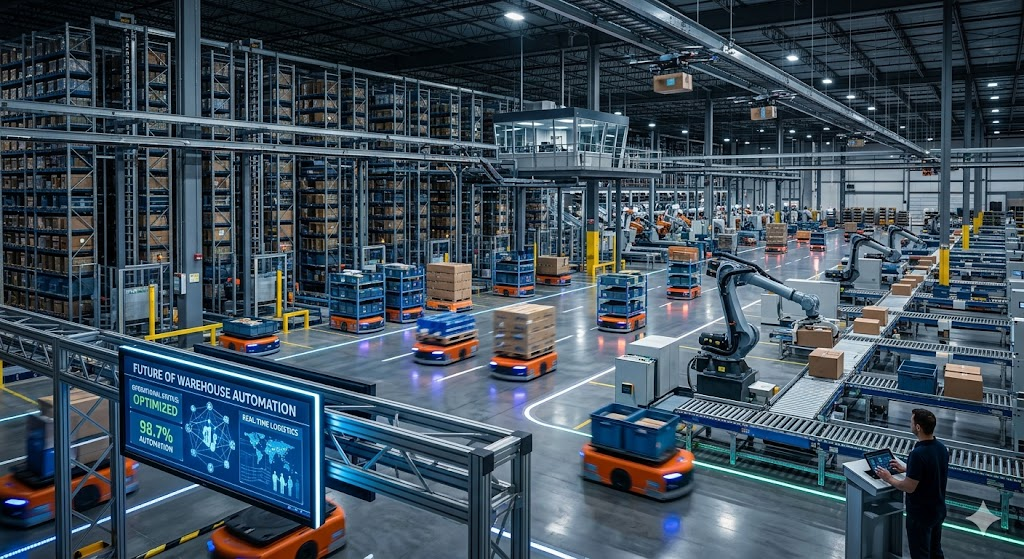
The future of warehouses is becoming more digital and connected. Experts believe that warehouse digital transformation will continue growing with AI and robotics working together.
AI and Human Collaboration in Warehouses
Humans and robots will work side by side. Robots will handle heavy tasks, while humans manage operations.
Future Predictions for Smart Warehouses
Warehouses will become fully connected systems using warehouse orchestration software and smart AI tools.
What Businesses Should Expect Next
Companies should expect more automation investments, better software, and faster delivery systems.
Final Thoughts on Warehouse Automation News Today
Warehouse automation is not just a trend. It is becoming the foundation of modern supply chains. Businesses that adopt these technologies early will stay competitive in a fast-moving digital world.
FAQ: Warehouse Automation News Today
What is the latest warehouse automation technology?
The latest technologies include AI-powered robots, autonomous mobile robots (AMRs), and automated storage systems. These tools help warehouses move and store products faster and more accurately while reducing human effort.
How is AI being used in warehouse automation?
AI helps manage inventory, predict demand, and improve robot performance. It also supports smart routing and reduces errors in warehouse operations, making supply chains faster and more efficient.
Which companies are leading warehouse automation in 2026?
Companies like Amazon Robotics, Ocado, Symbotic, and Alibaba are leading the industry. They use advanced robotics and AI systems to improve warehouse speed and delivery performance.
What are the benefits of warehouse robotics?
Warehouse robotics increases speed, accuracy, and safety. Robots handle repetitive tasks like picking and packing, allowing human workers to focus on more complex jobs.
Will warehouse automation replace human workers?
No, it will not fully replace humans. Instead, it will change job roles. Humans will focus on managing systems, while robots handle repetitive physical tasks.
Why is warehouse automation important for supply chains?
It helps businesses deliver products faster, reduce costs, and improve accuracy. This is especially important in eCommerce, where customer expectations are very high.