In the ever-evolving sphere of data center design and operation, efficiency remains a driving force behind every infrastructure choice. Compact solutions are in high demand as organizations seek to maximize performance without expanding their physical or environmental footprint. Deploying 1U servers is one of the most effective strategies for achieving these goals, as these servers combine significant power with minimal space requirements. For a closer look at leading-edge solutions, visit https://nfina.com/nfina-servers/rackmount-servers/1u-server/. 1U servers are designed for environments where IT teams need to balance performance, scalability, and cost without compromising server density. As the digital economy grows, businesses across sectors, from cloud providers to enterprises with mission-critical applications, are increasingly turning to 1U form factors for rapid deployment and seamless scaling. Modern data centers prioritize adaptability, energy efficiency, and processing power. By using 1U servers, organizations not only reduce their physical infrastructure footprint but also streamline management and maintenance practices. This article will explore the fundamentals of 1U servers, assess their unique advantages, review best practices for real-world deployment, and look ahead at how innovations in server technology continue to shape the data center industry.
Understanding 1U Servers
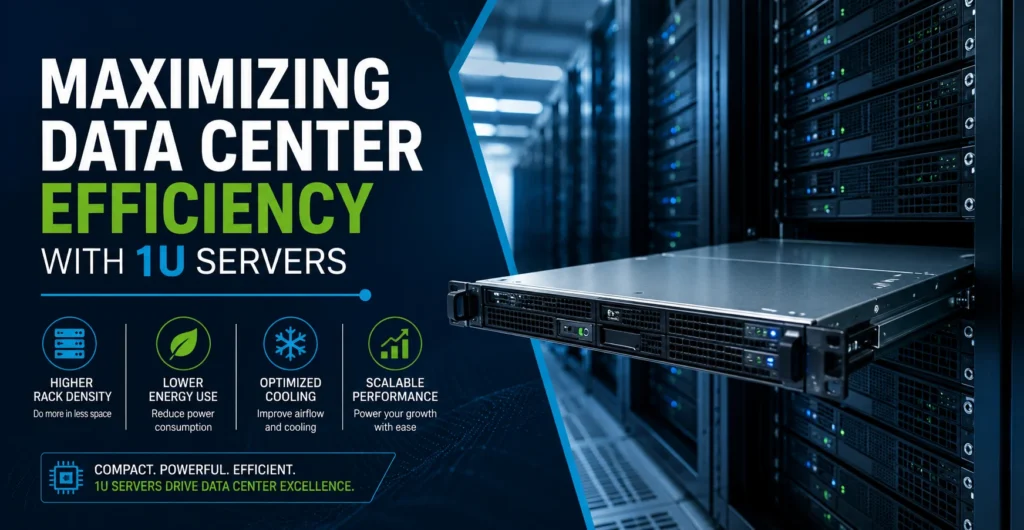
1U servers are engineered to fit a single rack unit, measuring about 1.75 inches in height. This standardization has proven indispensable to data center professionals who seek to maximize rack capacity and streamline upgrades or migrations. With their compact profile, 1U servers enable IT teams to deploy dense compute arrays without overhauling existing infrastructure. The small footprint of each 1U server allows dozens to hundreds of machines to be installed within traditional rack enclosures. As data processing and storage needs continue to mount across industries, the ability to house more servers in a confined space is critical.
Benefits of 1U Servers
Organizations realize several key advantages by adopting 1U servers across their IT environments:
- Space Efficiency: The primary appeal of 1U servers is the ability to achieve high-density installations. Businesses can dramatically increase compute power per square foot, especially in facilities where rack space is costly or limited.
- Energy Efficiency: Innovations in hardware and design have led to 1U servers that consume significantly less power while improving performance. Enhanced energy management and cooling efficiency ultimately lower operating expenses and environmental impact.
- Scalability: The modular nature of these servers supports agile scaling. IT teams can incrementally increase computing resources as demand rises, sidestepping the expense and downtime that come with large-scale hardware overhauls.
Due to these properties, 1U servers are favored for cloud-hosting, web serving, virtualization, and other compute-intensive tasks.
Implementing 1U Servers in Data Centers
Successful deployment of 1U servers involves in-depth assessment and infrastructure planning:
- Assessment of Needs: IT decision-makers should evaluate computational workloads, storage expectations, and network requirements before making substantial investments in new server hardware.
- Infrastructure Compatibility: It is essential to confirm that racks, power systems, and cooling mechanisms can support higher server densities. Overlooking these considerations can result in performance bottlenecks and costly retrofits.
- Network Configuration: High-density environments require robust and redundant network architectures. Laying out proper cabling, top-of-rack switches, and multi-path connections ensures resilience and minimizes downtime during scaling.
Supporting high-density deployments also demands attention to airflow, ambient temperature, and the arrangement of hot and cold aisles for optimal cooling. Proper planning and execution of these components position data centers for high performance and future expansion.
Best Practices for 1U Server Deployment
- Efficient Cooling Solutions: Densely packed racks intensify heat concentration, which calls for advanced cooling strategies like liquid cooling or in-row air conditioning.
- Regular Maintenance: Scheduling routine firmware updates, hardware inspections, and dust cleaning helps prevent downtime and prolongs the server’s operational life.
- Monitoring Systems: Deploying monitoring tools provides visibility into temperature, voltage, and server performance, allowing proactive intervention before minor issues evolve into major failures.
Well-implemented best practices reduce breakdown risks and ensure that dense compute architectures operate reliably even at scale.
Case Studies of 1U Server Implementation
- High-Density Deployments: A notable Fortune 100 organization enhanced data center efficiency by rolling out more than 30,000 1U servers, achieving a Power Usage Effectiveness (PUE) of 1.06. This figure is well above industry averages and demonstrates the tangible benefits of focused efficiency efforts. For more details, see Scientific Computing World.
- Edge Computing Applications: Major technology companies leverage 1U servers for edge deployments, placing compute power closer to data sources. This proximity dramatically decreases latency and supports real-time applications such as IoT, autonomous vehicles, and industrial automation.
These instances highlight how 1U servers deliver both environmental gains and commercial value.
Future Trends in 1U Server Technology
- Enhanced Performance: Ongoing breakthroughs in processor and memory technologies enable 1U servers to tackle more complex workloads than ever before. Expect higher core counts, increased RAM, and faster NVMe storage as standards evolve.
- Energy Efficiency Innovations: The next wave of 1U designs prioritizes sustainable operation, featuring systems that use less energy for both computing and cooling without sacrificing power.
- Integration with AI and Machine Learning: With specialized hardware, 1U servers are now capable of supporting the heavy data requirements of artificial intelligence and machine learning, making them a cornerstone in both on-premises and cloud-based AI strategies.
These advancements ensure the continued relevance of 1U servers for organizations that aim to future-proof their data environments. Leading cloud and enterprise providers are already investing in these trends as part of their long-term IT strategies.
Conclusion
Deploying 1U servers offers a strategic blend of dense capacity, outstanding efficiency, and flexibility for scaling operations. By following modern best practices and aligning infrastructure decisions with the latest advancements in server technology, organizations position themselves to optimize data center resources both now and into the future. For businesses determined to operate sustainably and competitively, the 1U server represents a clear path forward in data center evolution. These compact systems support virtualization, cloud integration, and high-performance computing while maximizing valuable rack space and reducing energy consumption. Their modular design also simplifies maintenance, upgrades, and future expansion as business needs evolve. By investing in reliable hardware, effective cooling, and proactive management tools, organizations can improve system availability, lower operating costs, and enhance overall performance. A well-planned 1U server deployment provides a scalable and resilient infrastructure that supports long-term growth, operational efficiency, and emerging technology demands.