

Mako artificial intelligence usually refers to Mako, a web-native AI model from TinyFish that operates real websites for you. You give it a goal, and it reads pages, logs into portals, fills forms, and returns clean, structured data. It became generally available to enterprises on 21 July 2026.
But the name is crowded. A surgical robot from Stryker, an offline coding studio, and an AI ad tool all go by “Mako” too, which is why search results look so mixed.
This guide clears that up fast. You will learn what the TinyFish Mako model is, how its planner and executor design works, and where it beats search and scraping tools. You will also see a sample prompt, the real limits, and the safety checks to run before you let any agent log in for you. If you meant the surgical robot or another Mako, jump to the quick guide below.
- 🧭 Which Mako Do You Mean? A Quick Guide
- 🐟 What Is Mako AI? TinyFish’s Web-Native AI Model
- ⚙️ How Mako Works: The Two-Model Architecture
- 🔐 Authenticated, Multi-Step Workflows: Where Mako Stands Out
- 🛠️ How to Use Mako: A Hands-On Walkthrough
- 💰 Mako Cost, Benchmarks, and Token Efficiency
- ⚔️ Mako vs. Alternatives: Browser Agents vs. API Scraping
- ⚠️ Limits, Failure Modes, and Compliance
- 🔎 Other Mako AI Products You Might Be Looking For
- 🦾 Mako SmartRobotics™: Stryker’s Surgical Robot
- ❓ Frequently Asked Questions
- 🏁 Conclusion and Sources
🧭 Which Mako Do You Mean? A Quick Guide
Search results for this keyword are mixed. Four very different products use the name, so start here.
| Mako | What it is | Who it is for |
|---|---|---|
| TinyFish Mako | A web-native AI model that operates websites | Developers and enterprises |
| Stryker Mako SmartRobotics™ | A robotic-arm system for joint replacement | Patients and surgeons |
| MAKO-AI | An offline-first multi-agent software studio | Indie builders and students |
| Mako Ads (trymako.ai) | An AI tool for ad creatives | Ecommerce and SaaS marketers |
👉 This article focuses on the TinyFish model. The other three get their own sections further down.
🐟 What Is Mako AI? TinyFish’s Web-Native AI Model
📌 Mako in Two Sentences
Mako is an AI model built by TinyFish for one job: operating the live web. You give it a goal, and it reads pages, clicks, fills forms, and returns structured results. According to a Dealroom summary of the launch, it became generally available to enterprises on 21 July.
A general-purpose LLM tries to do everything. Mako is trained only on web tasks, so it stays small and focused.
🗞️ Latest Mako News and Updates
✅ TinyFish announced Mako through a press release dated July 22, 2026.
✅ It is now the default model behind the TinyFish Web Agent.
✅ You can try it through the API, MCP, or a Playground.
⚙️ How Mako Works: The Two-Model Architecture
🧠 Reasoning Model Plans, Mako Executes
TinyFish pairs Mako with a reasoning model of the customer’s choice. The reasoning model understands the goal and plans the task. Mako handles the doing.
| Step | Who handles it | Job |
|---|---|---|
| 1 | Reasoning model | Understands the goal and plans the steps |
| 2 | Mako | Reads the page and picks the next action |
| 3 | Mako | Clicks, types, and moves to the next page |
| 4 | Mako | Returns structured results |
This split matters for cost. A big model does the thinking once, and a lean model does the repetitive clicking.
🔬 Under the Hood: Mixture-of-Experts, 35B/3B Parameters, and Qwen
Mako has 35 billion total parameters, with only 3 billion active at any moment. This is a mixture-of-experts design. Think of a large team where only a few specialists work on each task, which keeps it fast and cheap.
TinyFish started from an Alibaba Qwen model, then trained it on real web task data from production workflows.
👀 How Mako Reads a Web Page
TinyFish says Mako reads pages as clean semantics, not raw HTML or pixels. Here is a simple illustration of the idea.
| Approach | What the model sees |
|---|---|
| Raw HTML | Hundreds of lines of tags, scripts, and styles |
| Screenshot | Pixels it must interpret visually |
| Semantic view | An email field, a password field, and a Sign in button |
The third view is shorter, so each step costs less and the model is less likely to get lost.
🔐 Authenticated, Multi-Step Workflows: Where Mako Stands Out
🌐 Live Web Automation Behind Logins
Many valuable websites have no API. Insurance carrier portals are a good example. The portal is the product.
Search and extraction tools can read public pages. TinyFish positions Mako for the harder case: authenticated workflows where the agent must log in, fill forms, and move through several screens.
🏢 Real-World Use Cases
TinyFish’s customers describe these uses:
🔹 Insurance quotes: collecting comparable quotes from carriers without APIs (QuoteSweep)
🔹 QA testing: driving real browsers thousands of times a day (TestSprite)
🔹 Healthcare data: building accurate provider intelligence (Bonfire Analytics)
🔹 Marketplace tracking: following thousands of software products (AppSumo)
🛠️ How to Use Mako: A Hands-On Walkthrough
🔌 Access Options: API, MCP, and Playground
| Route | Best for |
|---|---|
| Playground | Beginners who want to test a goal quickly |
| API | Developers building Mako into a product |
| MCP | Connecting Mako to an AI assistant or agent |
👉 Start in the Playground. It shows you how the agent behaves before you write any code.
🎯 From Objective to Structured Output
The flow is simple: state the goal, let Mako run, and receive clean data. The official Mako page demos this with an insurance example.
A sample goal: “Get 10 general liability quotes for a 12-person consulting LLC in California. Include provider, monthly premium, deductible, and source URL.”
An illustrative result (not the exact API format):
json
{
  "quotes": [
    {
      "provider": "Provider 01",
      "monthly_premium": "$84",
      "deductible": "$500",
      "source_url": "provider-01.com/quote"
    }
  ]
}
💡 Practical tip: Run your first test with one portal and a test account. Check every field against the live site before you scale up. This catches wrong assumptions early.
💰 Mako Cost, Benchmarks, and Token Efficiency
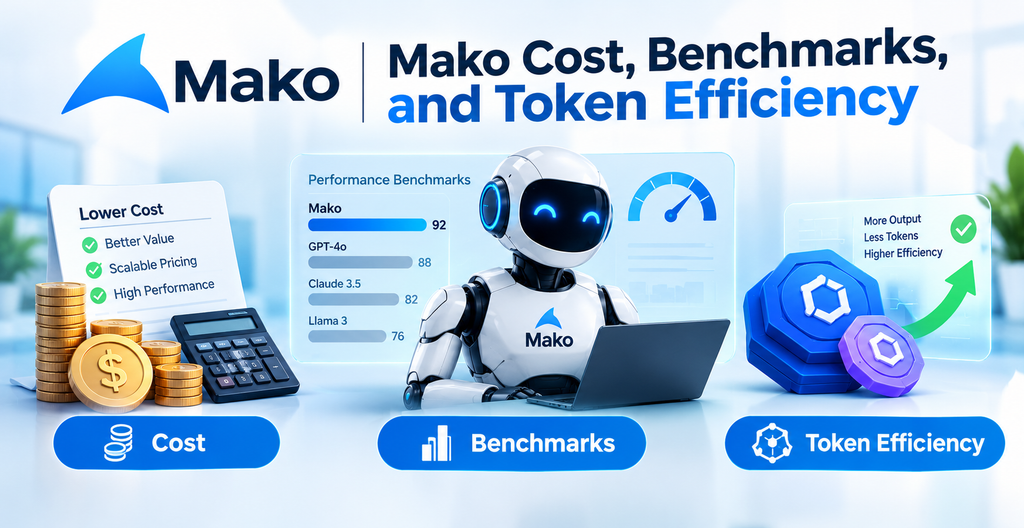
📉 Frontier Model Cost vs. Mako Inference Cost
TinyFish says Mako runs at “a fraction of frontier-model cost.” The company does not publish exact savings on its Mako page. The small active size (3B parameters) supports the claim, but it is not proof.
Check TinyFish’s pricing page for current rates before you budget.
📊 What Benchmarks Exist and What’s Missing
TinyFish lists a benchmarks page on its site. Independent third-party tests are still limited, since the model is new. Treat vendor numbers as a starting point and run your own pilot.
⚔️ Mako vs. Alternatives: Browser Agents vs. API Scraping
🧩 Comparison Table
TinyFish names Exa, Firecrawl, Parallel, and Tavily as tools buyers compare it with. Always confirm each vendor’s current features in its own docs.
| Tool type | Best for | Logins and multi-step actions |
|---|---|---|
| Mako (browser agent) | Completing tasks on live sites | Yes, per TinyFish |
| Search and extraction APIs (Exa, Firecrawl, Tavily, Parallel) | Finding and reading content | TinyFish says read-only tools cannot reach these |
🎯 Which Tool Fits Which Job
✅ Need to read public pages and collect text? Use a search or extraction API.
✅ Need to log in and complete a form? Use a browser agent like Mako.
✅ Need both? Combine them in one pipeline.
⚠️ Limits, Failure Modes, and Compliance
🚧 Where Web Agents Struggle
Every web agent faces the same hurdles:
🔹 Anti-bot defenses and CAPTCHAs
🔹 Pages that change layout without warning
🔹 Sites that time out or ask for extra verification
TinyFish does not publish detailed failure rates on its Mako page. Plan for a human to step in when a run gets stuck.
🛡️ Terms of Service, Privacy, and Audit Trails
Logging into a portal for someone else carries real responsibility. Ask these questions first:
✅ Does the site’s terms of service allow automated access?
✅ Who stores the credentials, and how are they protected?
✅ Can you review a log of every action the agent took?
🔎 Other Mako AI Products You Might Be Looking For
💻 MAKO-AI: The Offline-First Multi-Agent Studio
MAKO here stands for Multi-Agent Keystone Orchestration. Its BetaList listing describes a local studio with specialized agents (coder, tester, scribe, sentinel) that build software on your own machine. It has no connection to the TinyFish model.
📣 Mako Ads (trymako.ai) and Mako App Reviews
Mako Ads generates ad creatives for Meta and TikTok. It offers an AI Mode for done-for-you work and a Manual Mode for more control. Trustpilot reviews are mostly positive, but reviews are opinions, so test it yourself before paying.
🦾 Mako SmartRobotics™: Stryker’s Surgical Robot
🩻 Scan, Plan, Surgery: How It Works
Hospitals describe a three-step process. First, a CT scan creates a 3D model of your joint. Second, the surgeon builds a personal plan. Third, the surgeon guides the robotic arm in the operating room.
The robot does not operate on its own. The surgeon guides it, and a feature called AccuStop™ helps keep cuts inside the planned boundaries.
🤖 Where “AI” Is Real and Where It’s Marketing
Some hospitals call Mako “AI-powered.” What the sources actually describe is 3D planning software and haptic guidance. Marketing language varies, so ask your surgeon exactly what the software does.
🦴 Procedures and Platforms
Stryker says Mako now covers the hip, knee, partial knee, shoulder, and spine. The newer Mako RPS is a handheld system that Stryker fully launched in the US for knee surgery.
🩺 Who Is a Candidate, Risks, and Recovery
Mako total knee replacement is aimed at adults with mid to late-stage osteoarthritis who did not get relief from other treatments. Studies cited by Stryker’s patient site link robotic-arm assisted knee replacement with better early recovery and shorter hospital stays than jig-based surgery.
💡 Practical tip: Bring these questions to your consult: How many Mako procedures have you done? What happens if the plan changes mid-surgery? What is my expected recovery timeline?
⚖️ Pros and Cons of Mako Robotic Surgery
| Pros | Cons |
|---|---|
| Personalized 3D plan from a CT scan | Needs a CT scan before surgery |
| Helps the surgeon stay inside planned boundaries | Not available at every hospital |
| Studies show better early recovery | Surgeon experience still matters most |
| Real-time plan adjustments | Joint replacements do not last forever |
This is general information, not medical advice. Talk to a surgeon about your case.
❓ Frequently Asked Questions
✅ Is the Mako app legit?
It depends on which Mako you mean. Mako Ads has a public Trustpilot profile with mostly positive reviews, and TinyFish’s Mako is a known company product. Check reviews, read the billing terms, and use a trial first.
💲 How much does a Mako robot cost?
Hospital prices for the surgical system are not publicly listed in the sources I reviewed, so verify any figure before you rely on it. For patients, the cost depends on insurance and the hospital. Ask the billing office for a written estimate.
🏥 Is Mako owned by Stryker?
The surgical Mako system belongs to Stryker. The TinyFish Mako AI model, MAKO-AI, and Mako Ads are separate products with no link to Stryker.
🤖 What is Mako AI?
Mako AI usually means TinyFish’s web-native model, which operates live websites and completes multi-step workflows. The name also appears on a surgical robot, a local AI studio, and an ad tool.
🔍 What are the pros and cons of Mako robotic surgery?
Pros include personalized planning, guided cutting, and better early recovery in cited studies. Cons include the CT scan requirement, limited availability, and the fact that surgeon skill still drives results. Discuss both sides with your surgeon.
🏁 Conclusion and Sources
Mako AI is a shared name, so identify your meaning first. For the AI model, the key ideas are a small web-native model, a planner and executor split, and strength in login-protected workflows. The primary places to verify claims are the TinyFish Mako page and Stryker’s patient site linked above, and you should run your own pilot before committing to any tool.