Conversational AI has seamlessly woven itself into many aspects of our daily routines, reshaping how we interact with technology and one another. From setting reminders to offering companionship, these intelligent systems improve the way we navigate both work and personal life. As AI grows more sophisticated, its role in delivering value across different domains continues to expand. If you are new to the topic, what is conversational AI? offers a concise introduction. AI’s ubiquity is becoming nearly invisible, yet it is fundamentally changing the experience of being connected.
Technology companies are racing to deploy conversational agents with ever greater capabilities. Whether helping you book appointments or answer questions in real time, conversational AI’s transformative impact is felt in ways both subtle and profound. Voice-activated assistants, messaging bots, and other forms of AI are routinely embedded into everyday products and services. This widespread adoption reflects how rapidly conversational AI has moved from novelty to necessity. As society becomes increasingly reliant on these advancements, expectations for the reliability and responsiveness of these systems continue to rise. Developers and companies alike must adapt, making continuous improvements to meet user demands while remaining mindful of ethical considerations that arise as capabilities grow.
Personal Assistants
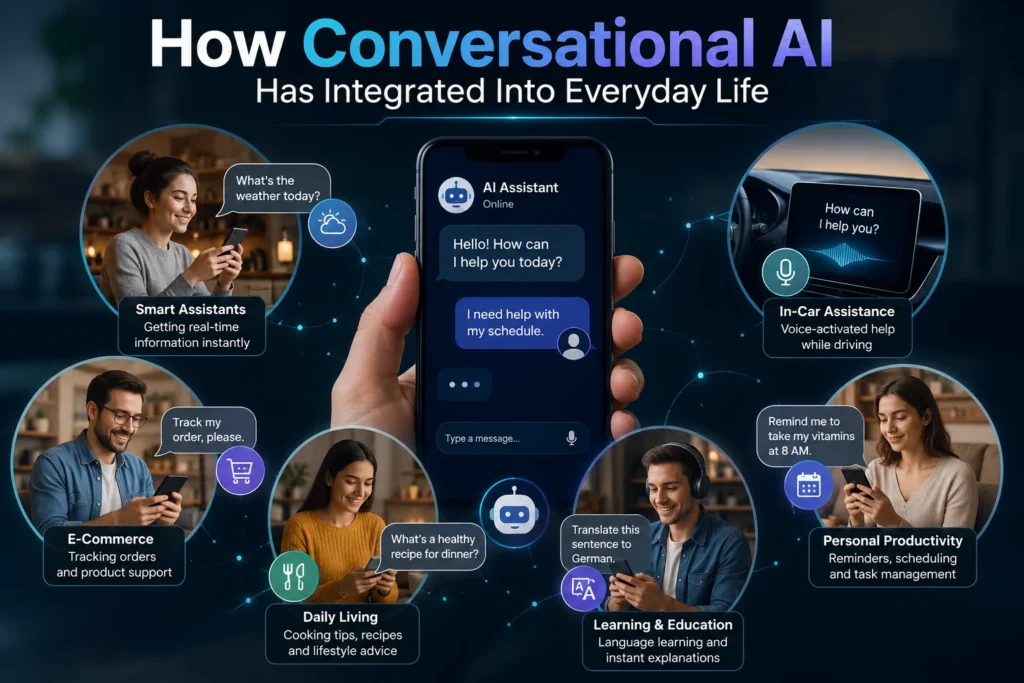
Virtual assistants such as Siri, Alexa, and Google Assistant have become familiar fixtures in many homes. These AI-powered helpers simplify everyday tasks, from managing schedules to controlling smart devices. For example, asking your digital assistant to turn on the lights or play your favorite song is now routine. According to a press release by SoundHound AI, AI chatbots support both personal and professional tasks, blurring the line between productivity and leisure in today’s tech-driven lifestyle. This integration streamlines mundane activities and allows people to focus on what matters most. As these assistants develop further, they are expected to support even more customized routines, adapting to individual habits and learning user preferences in increasingly nuanced ways.
Customer Service
Conversational AI is transforming customer support for businesses and consumers alike. AI chatbots and virtual agents can now respond to queries, handle complaints, and process transactions more efficiently than traditional methods. In sectors such as food delivery and online retail, this technology is revolutionizing how users interact with brands. DoorDash recently introduced a bot that lets customers place orders with text prompts or photos, reducing friction and improving satisfaction. As a result, businesses not only address consumer issues faster but also allocate human agents to more complex needs, thereby boosting overall productivity. For companies striving to maintain a positive reputation in the digital age, adopting conversational AI has become more than a trend; it is a necessity to remain competitive and ensure customer loyalty through rapid, consistent, and effective service experiences.
Healthcare Support
Healthcare providers are harnessing conversational AI to improve access and efficiency in patient care. AI-driven tools can help people self-assess symptoms, offer advice, and even connect patients to specialists when needed. This not only supports individuals in managing their health but also helps ease pressure on overburdened medical staff. The growing use of AI chatbots in health apps and telemedicine is making everyday healthcare information more accessible for millions. As noted in a SoundHound AI article, these emerging technologies could lead to faster, more accurate care and support for patients worldwide. The ongoing refinement of AI systems promises future tools that may provide tailored wellness recommendations, medication reminders, and coaching for chronic condition management, thereby contributing to improved health outcomes.
Education and Learning
Education platforms are embracing conversational AI to provide personalized learning experiences. Interactive bots and virtual tutors now guide students through complex topics, answer questions, and adapt to each learner’s unique needs. From language learning apps to online coursework, these digital companions deliver on-demand guidance and promote active engagement. A growing body of research highlights how conversational AI, beyond formal education, plays a significant role in informal or self-directed learning, assisting users with concepts anytime, anywhere. As technology evolves, AI is poised to enhance accessibility and learning effectiveness for users of all ages and backgrounds. With rapid advancements, educators are exploring new models where AI can deliver continuous feedback, monitor progress, and motivate students to achieve their academic goals more efficiently than ever before.
Social Interaction
Conversational AI is being used as a tool for social engagement and emotional support. Many older adults and individuals facing isolation have found comfort and companionship in AI agents and chatbots that offer conversation or simple reassurance. In cases where human connection is scarce, these digital interactions provide a vital lifeline, reducing loneliness and fostering a sense of belonging. The increasing demand for AI-based social tools reflects society’s openness to integrating technology into emotional and relational life.

Shopping and Commerce
Retailers and e-commerce companies have incorporated conversational AI to make shopping more intuitive and enjoyable. Shoppers benefit from instant product selection assistance, customized recommendations, and seamless checkout. Google has enhanced its platforms with AI-driven features such as voice-activated search and agentic checkout, making the online purchasing path more natural and convenient. By responding to queries in real time and personalizing recommendations, these systems reduce friction in digital commerce and drive higher consumer engagement. As retailers continue to innovate, conversational AI will shape the future of both physical and virtual shopping environments, ensuring a truly customer-centric experience.
Challenges and Considerations
While conversational AI brings many advantages, it also presents real challenges. Personal privacy and data security remain key concerns, especially as AI systems collect and process ever-increasing amounts of sensitive information. There is also ongoing debate about the impact of AI on human interaction and social skills, as people turn to technology for support traditionally provided by other humans. Responsible deployment of conversational AI demands ongoing attention to ethics, transparency, and regulatory compliance to ensure that societal well-being is prioritized alongside technological progress. Further, there is a growing call for interdisciplinary collaboration among technologists, ethicists, and policymakers to create robust frameworks for responsible innovation and ensure AI systems serve everyone effectively and fairly.
Future Outlook
The evolution of conversational AI promises even deeper levels of integration in the years ahead. Advancements in natural language processing, machine learning, and context awareness will make AI systems more sophisticated and empathetic. These improvements are likely to increase acceptance and utility, making conversational AI an even more indispensable part of daily routines. As society adapts to these changes, new opportunities and challenges will inevitably arise, requiring thoughtful navigation and responsible innovation.
Conversational AI now touches nearly every corner of modern life. From managing our time to supporting health, education, and social connection, this technology regularly delivers convenience and support. As its role expands further, its impact will continue to shape how society interacts, communicates, and grows.