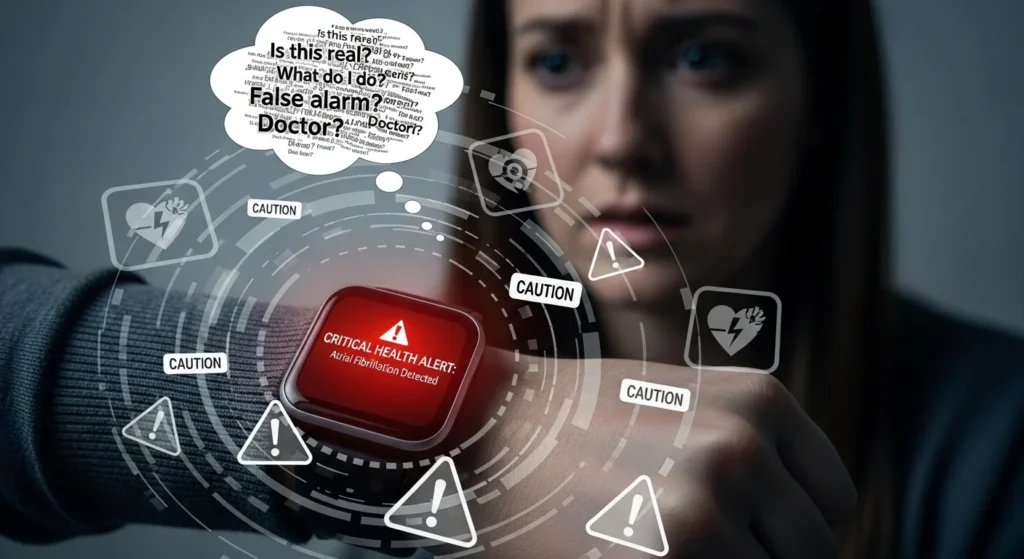
False health alerts in wearable apps can be confusing and stressful for users who rely on smart devices to monitor their health. Wearable apps track heart rate, sleep, activity, and other vital signs in real time, but they are not always accurate. A false alert may warn about a serious health issue when there is none, causing unnecessary worry and even leading to unneeded medical visits.
As wearable technology becomes more common, understanding why these false health alerts happen and how they affect users is more important than ever. This article explains what false health alerts are, why they occur in wearable apps, and what users can do to reduce their impact while still benefiting from digital health tracking.
What Counts as a False Health Alert?
When we say “false health alert,” we’re not always talking about something that’s completely wrong. In wearables, false health alerts hold a different meaning. Often, it’s something that’s technically correct but practically misleading.
Think of something like this: It’s Sunday afternoon, and all you have done is lie in bed after making yourself a cup of coffee, but your wearable watch says that you have walked 5000 steps. This was something you could notice easily. But now, what if it was something that was negative?
For example, an alert saying your heart rate is “abnormally high” might be accurate in isolation. However, it probably ignored the fact that you just climbed stairs or were anxious. Similarly, sleep warnings that label a night as “poor” without explaining why can feel alarming. This is true even if the data only reflects one restless phase.
Over time, this can lead you to think that something is wrong with your health.
Stress notifications or activity goals based on partial or noisy data also fall into this category. The issue isn’t that the data exists; it’s mainly how confidently it’s presented. A false alert often lacks context or explanation. This, unfortunately, makes users assume the worst.
Why Do False Alerts Happen in Wearable Apps?
A big reason behind false alerts is sensor limitations. Wearables rely on three main aspects:
- Optical sensors,
- Motion tracking,
- Indirect measurements
And all of these can be very easily affected by sweat or sudden movements. Even some skin friction can easily interfere with the readings. The app still has to say something, even when the signal isn’t perfect.
Another problem is one-size-fits-all thresholds. Many apps use generalized “normal” ranges for heart rate or stress.
And sadly, all are based on men, and they do not even consider women. Bodies aren’t generic. What’s normal for one person might be unusual for another. Women tend to have different “normals” based on where they are in their menstrual cycle.
Now add all that to the lack of user context. Apps don’t fully understand emotions or lifestyle changes. This is where misleading alerts are born.
What is The Psychological Impact of False Health Alerts on Users?
Whenever something starts psychologically affecting a user, that’s where things get serious. False or unclear alerts don’t just confuse users; they also have an impact on how people feel about their health.
Many users start overthinking normal bodily changes. A slightly high heart rate becomes a source of panic for them. It only feels natural for an anxious or overthinking person to feel this way.
Over time, users begin interpreting alerts as medical diagnoses, even when the app never claims to be one.
Then comes alert fatigue. When notifications keep buzzing, users emotionally disconnect themselves from them. They either feel overwhelmed or numb. Ironically, the more alerts an app sends, the less seriously users take them.
Instead of peace of mind, wearables start creating low-level anxiety that follows users throughout the day. This happens even for those users who didn’t have anxiety prior to this. And it’s something every wearable app development company needs to think about seriously if they want long-term user trust.
When do Users Stop Trusting Wearable Apps?
Once a user stops trusting technology, it shows in their behavior. They start ignoring alerts and mute their notifications. Others turn off the health features entirely. Engagement starts dropping, not because the app is useless, but because it feels unreliable.
This breach in trust doesn’t just hurt the app experience. It’s a risky move. When users stop paying attention, they might miss a genuinely important warning. A real irregular heart rhythm or concerning pattern gets lost in the noise created by dozens of false positives.
If you’re at the level of being a recognizable brand, this is damaging to you. Health is personal. If users feel misled or emotionally stressed by an app, they uninstall and remember why they did it. That lost trust is incredibly hard to rebuild.
Why Is This a Design and Product Problem?
Here’s the real truth about false health alerts. They are never just a technical issue. They’re a design and product decision problem. Yes, that’s 100% true.
See, many alerts are designed to increase engagement instead of giving clarity. This is because more alerts mean more active users. But health isn’t like social media. The cost of unnecessary notifications is emotional and psychological. It isn’t something that relates to the user experience.
Another big gap is how uncertainty is communicated. The better word here would be “not communicated”. Most apps don’t explain data quality or limitations. They present insights as facts, not probabilities. There’s also another thing. There is very little education for users around what alerts actually mean and when users should care.
This gap between data collection and user understanding is where most health apps fall short.
Conclusion
False health alerts are more than just a small bug in wearable apps; they’re a full-blown trust issue. Even when the data is technically accurate, poor context and communication can lead to anxiety and emotional fatigue.
Wearable apps sit close to users’ bodies and minds. That comes with responsibility. Accuracy matters, but empathy matters more. The future of wearable health isn’t about more data or more alerts; it’s about better judgment.