

How does a hash help secure blockchain technology, and why does it matter? Every block in a blockchain uses a cryptographic hash to protect data from being changed. A hash works like a digital fingerprint. Even a tiny change breaks the chain and alerts the network, keeping the system safe and tamper-proof.
In this article, you will learn what a hash is, how hashing works in blockchain, and why cryptographic hash functions are essential for keeping blockchain technology secure.
- What Is a Hash in Blockchain
- Key Properties of Cryptographic Hash Functions
- How Hashing Ensures Data Integrity in Blockchain
- How Hashes Link Blocks and Create Immutability
- Role of Hashing in Blockchain Consensus Mechanisms
- Hashing in Transactions and Digital Signatures
- Advanced Blockchain Structures That Use Hashing
- Common Hash Algorithms Used in Blockchain
- Limitations and Future Challenges of Hashing
- Conclusion
- FAQ: How Does a Hash Help Secure Blockchain Technology
What Is a Hash in Blockchain
Simple Explanation of Hash and Hashing
A hash is a special code that is created using a hashing algorithm. This algorithm takes any piece of information, like a transaction or a block of data, and turns it into a short, fixed-length string of numbers and letters. This process is called hashing. Every time you use the same information, it creates the same hash. But even a tiny change in the data will create a completely different hash. This is why hashing is so useful for checking data integrity.
Fixed-Length Output and the Digital Fingerprint Concept
Think of a hash like a fingerprint for a block of information. No two blocks have the same fingerprint, and each hash has the same length no matter how big the original data is. This fixed-length hash output makes it easy for computers to compare and verify data quickly. It also helps detect if someone tries to tamper with the information.
Common Hash Algorithms Used in Blockchain
Blockchain systems use strong hash algorithms like SHA-256, Keccak-256, and the BLAKE family. Bitcoin uses SHA-256 to secure its transactions, while Ethereum uses Keccak-256. These cryptographic hash functions are designed to be secure, fast, and nearly impossible to reverse.
Key Properties of Cryptographic Hash Functions
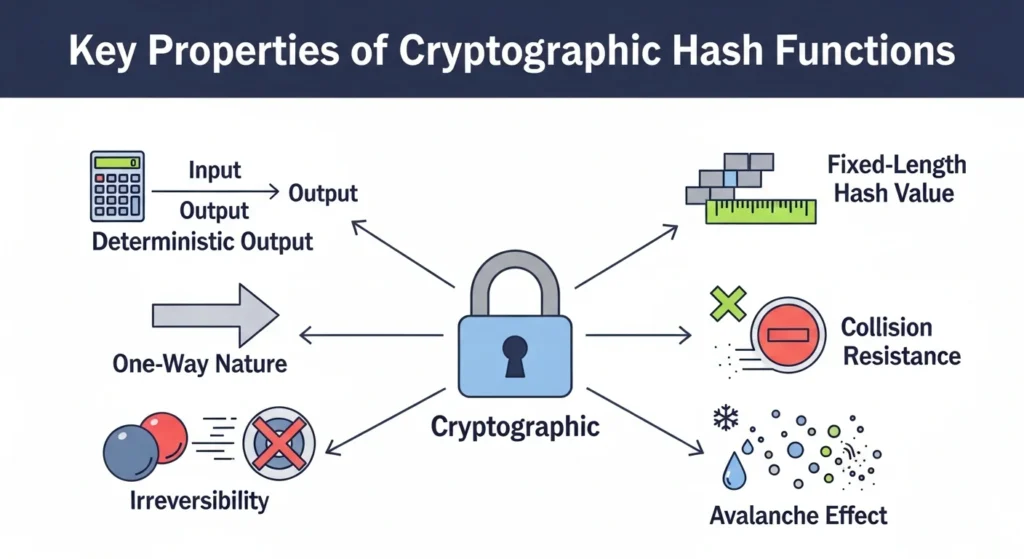
Deterministic Output
A hash is deterministic. This means that the same input will always produce the same hash. It helps the network quickly verify data without storing the original information.
Fixed-Length Hash Value
Every hash has a fixed-length output. This makes it simple to store, compare, and use for linking blocks.
One-Way Nature
Hashes are one-way functions. You cannot reverse a hash to get the original data. This irreversible hash transformation keeps sensitive information safe and secure.
Collision Resistance
Collision resistance means that it is extremely unlikely for two different inputs to create the same hash. This ensures the uniqueness of every block in the blockchain.
Avalanche Effect
Even a small change in the original data produces a completely different hash. This avalanche effect makes tampering obvious because the new hash will not match the original.
How Hashing Ensures Data Integrity in Blockchain
Role of Hashing in Data Integrity
Data integrity means that information stays correct and unchanged. Hashing ensures blockchain data integrity by giving each block a unique fingerprint. If anyone tries to alter a block, the hash will change, signaling a problem.
Hash Verification Process
Nodes in a blockchain network check each block’s hash to make sure it matches the data. This verification process keeps all transactions accurate and trustworthy.
Detecting Tampering Through Hash Mismatch
If someone changes even a single character in a block, the hash will not match the expected value. The network will immediately detect tampering, which helps maintain a tamper-resistant ledger.
How Hashes Link Blocks and Create Immutability
Previous Block Hash Linking
Each block in a blockchain stores the hash of the previous block. This creates a chain where every block depends on the one before it.
Blockchain Chain Structure Explained
This hash linking blocks structure makes blockchain immutable. Immutability means the information cannot be changed without affecting the whole chain.
Impact of Changing One Block
If someone tries to alter a block, the hash changes, breaking the link to the next block. This alerts the network and makes cheating nearly impossible.
Role of Hashing in Blockchain Consensus Mechanisms
Proof of Work and Hash Puzzles
In Proof of Work systems, miners solve hash puzzles to add new blocks to the blockchain. The puzzle requires finding a hash that meets certain conditions. This process secures the network by making it hard to add fraudulent blocks.
Mining Difficulty and Network Security
The difficulty of solving these puzzles ensures that attackers cannot easily tamper with the blockchain. Hashes provide Proof of Work security and help maintain decentralized verification.
Role of Hashing in Proof of Stake
Proof of Stake systems also rely on hashes for verification, but they use a different method. Hashing helps validate transactions without central authority, keeping the system secure.
Hashing in Transactions and Digital Signatures
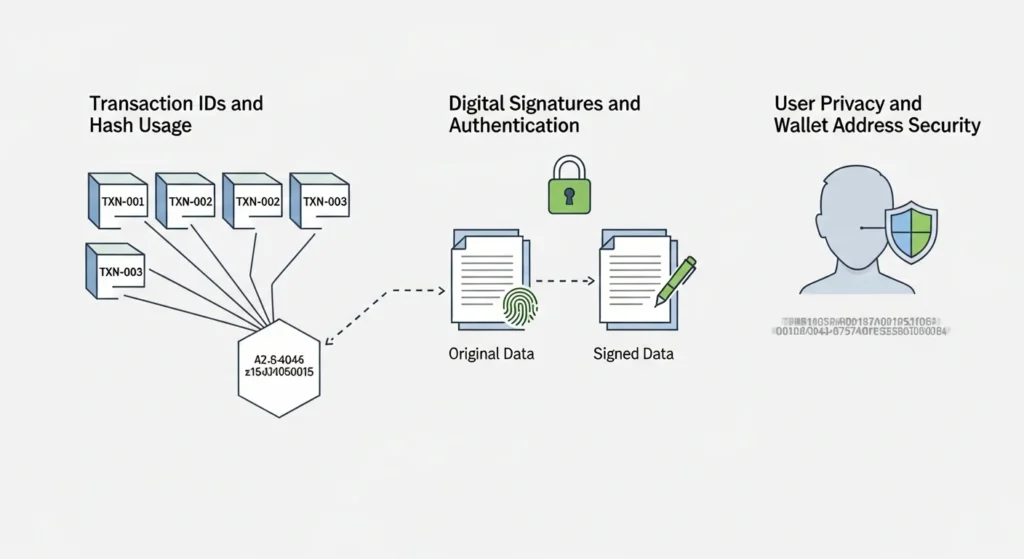
Transaction IDs and Hash Usage
Every transaction in the blockchain gets a unique transaction hash identifier. This ensures that transactions are easy to track and verify.
Digital Signatures and Authentication
Hashes work with digital signatures to authenticate senders. They confirm that the person making the transaction is authorized to do so.
User Privacy and Wallet Address Security
Hashing also protects user wallets and privacy. Even if someone sees a wallet address or hash, they cannot reverse it to get private information.
Advanced Blockchain Structures That Use Hashing
Merkle Trees and Transaction Verification
Merkle trees are structures that use hashes to efficiently verify many transactions. They combine multiple transaction hashes into one hash called a Merkle root. This helps blockchain nodes validate data faster and more securely.
Use of Hashed Data in Smart Contracts
Smart contracts also use hashed data to execute code safely. Hashing ensures that contract data cannot be changed after it is created.
Common Hash Algorithms Used in Blockchain
SHA-256 (Bitcoin)
Bitcoin relies on SHA-256 blockchain hashing to secure its blocks and maintain data integrity. This algorithm is reliable and widely tested.
Keccak-256 (Ethereum)
Ethereum uses Keccak-256 for its blockchain security. It helps create unique digital fingerprints for transactions.
Other Hash Algorithms
Other algorithms like RIPEMD-160 and BLAKE family variants are also used in different blockchain systems. Choosing the right hash function improves cryptographic security.
Limitations and Future Challenges of Hashing

Rare Collision Risks
Although collision resistance is strong, rare collisions can occur. Blockchain designs take this into account to maintain security.
Energy Consumption in Proof of Work Systems
Mining with hash puzzles requires energy. High energy consumption is a challenge for Proof of Work blockchains.
Quantum Computing and Future Threats
Future technologies like quantum computing may impact current hash algorithms. Researchers are developing new cryptographic algorithms for security in blockchain systems.
Conclusion
Hashes are essential for blockchain security. They act as digital fingerprints, link blocks together, and ensure data integrity. Hashing also supports transaction verification, digital signatures, and advanced structures like Merkle trees. Without hashes, blockchains would not be tamper-resistant or trustworthy. Understanding how a hash helps secure blockchain technology is key to learning how modern digital ledgers stay safe.
FAQ: How Does a Hash Help Secure Blockchain Technology
Q1: What is a hash in blockchain and why is it important?
A hash is like a digital fingerprint for data in the blockchain. It turns information into a fixed-length code that is unique for every input. This helps keep blockchain data safe, prevents tampering, and ensures that every block in the chain is connected securely.
Q2: How does a hash help secure blockchain technology?
Hashes protect blockchain by verifying data integrity. If someone tries to change even a small detail in a block, the hash will change completely. This alerts the network that the block has been tampered with, keeping the blockchain secure and trustworthy.
Q3: How is hashing used in blockchain transactions?
Every transaction in blockchain gets its own unique hash. Hashes are used to create transaction IDs, verify signatures, and protect user wallets. This ensures that transactions are authentic and cannot be altered without being detected.
Q4: What role do hashes play in linking blockchain blocks?
Each block in a blockchain stores the hash of the previous block. This links the blocks together in a chain. If one block is changed, the hash changes, breaking the chain. This immutability makes it extremely hard for anyone to tamper with blockchain data.
Q5: How do hash functions support blockchain consensus?
Hashes are used in Proof of Work and other consensus systems to secure the network. Miners solve hash puzzles to validate transactions, and this process makes it very difficult for bad actors to alter the blockchain, keeping it decentralized and trustworthy.
Q6: Can blockchain be broken if someone knows the hash?
No. Hash functions are one-way and irreversible. Even if someone knows a hash, they cannot reverse it to see the original data. This makes blockchain secure and resistant to hacking attempts.
References:
IBM Blockchain – Hashing Explained: https://www.ibm.com/topics/blockchain-security
Investopedia – Hash Function Definition: https://www.investopedia.com/terms/h/hash.asp