
ESG data has become the input that boards, treasury teams, procurement leads, and risk committees rely on to make decisions — and the input that regulators, lenders, and investors test under pressure. The data is now consequential to both internal decision-making and external scrutiny, while most enterprises are still building the capability that the dual role demands.
Three forces drive the shift: mandatory assurance under CSRD and most current regimes, capital-market pricing of ESG performance, and litigation exposure from unsubstantiated sustainability claims.
This blog examines six categories of strategic decision ESG data now informs, the maturity framework that helps enterprises identify their current position, the practices that translate data quality into business decisions, and how outsourcing ESG data research services help.
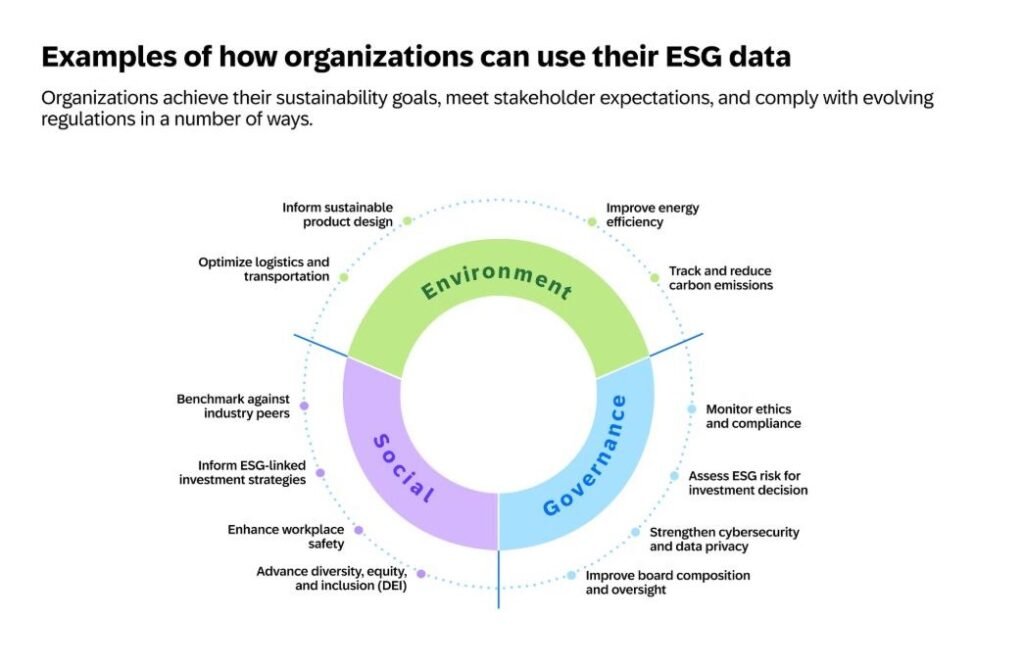
How ESG Data Strengthens Strategic Decision-Making at the Enterprise Level
Source: SAP
1. Risk Identification and Mitigation
ESG data identifies material risks before they affect operations, cash flow, compliance, or reputation. It converts climate, supplier, regulatory, labor, and governance signals into evidence for enterprise risk decisions. Leadership can use this ESG data for risk assessment and prioritize mitigation budgets, risk controls, insurance planning, supplier actions, and board reporting.
- Asset-level climate exposure informs decisions on facility upgrades, resilience planning, insurance coverage, and relocation assessments.
- Supplier noncompliance data guides contract renegotiation, enhanced due diligence, vendor diversification, or supplier exit decisions.
- Regulatory exposure across jurisdictions informs disclosure controls, compliance staffing, reporting timelines, and market expansion decisions.
- Labor and human rights risks in the value chain guide audit schedules, corrective actions, and sourcing model changes.
- Governance gaps and weak control evidence inform board oversight, policy updates, internal controls, and assurance planning.
- Concentrated risk across assets, suppliers, or regions guides mitigation budget allocation across the most exposed business areas.
2. Cost Reduction and Operational Efficiency
Operational ESG data helps enterprises identify where resource inefficiencies are increasing cost, emissions, or process waste. It supports decisions on facility upgrades, process redesign, equipment investments, and supplier-level efficiency improvements.
- High energy consumption at specific facilities supports decisions on lighting retrofits, HVAC upgrades, equipment replacement, or renewable energy adoption.
- Water usage patterns across plants or sites guide decisions on conservation systems, recycling processes, and operating controls.
- Waste generation data by process or product line informs workflow redesign, material recovery programs, and landfill reduction measures.
- Material-use inefficiencies support decisions on input substitution, inventory planning, and the reduction of production losses.
- Facility-level emissions data helps prioritize sites for decarbonization investment and operational improvement.
- Supplier-level resource data informs sourcing changes, efficiency requirements, and supplier performance terms.
3. Capital Access and Sustainable Financing
Enterprises assess which financing options they can support with credible performance evidence. ESG data informs decisions on sustainability-linked loans, green bonds, investor reporting, and lender due diligence.
- Verified emissions data support decisions on sustainability-linked loans, green financing structures, and transition finance eligibility.
- Measurable progress on ESG targets helps treasury teams compare sustainability-linked debt with conventional financing options.
- Weak ESG records signal the need for stronger data controls before lender, investor, or rating agency review.
- ESG rating gaps guide improvements in disclosures, policies, and performance indicators before capital market engagement.
- Sector-specific ESG performance data supports investor positioning for ESG-screened equity allocations.
- Auditable sustainability data strengthens decisions on green bonds, transition finance, or standard debt issuance.
4. Regulatory Compliance and Disclosure Readiness
ESG data helps enterprises understand where disclosure obligations, reporting controls, and assurance requirements need attention. It supports decisions on compliance planning, data governance, audit readiness, and regulatory risk management.
- Emissions data gaps indicate where Scope 1, Scope 2, or Scope 3 reporting controls require correction.
- Supplier and value chain data gaps inform updates to due diligence for upstream and downstream reporting obligations.
- Workforce, governance, and operational data gaps clarify which disclosure areas need stronger ownership.
- Jurisdiction-specific reporting requirements shape decisions on compliance resources, reporting timelines, and assurance preparation.
- Inconsistent ESG records support decisions on data definitions, approval workflows, and documentation standards.
- Assurance-readiness gaps identify where evidence trails, internal controls, and review procedures need strengthening.
5. Workforce Engagement and Reputation
HR, ethics, and investor relations functions use ESG data to assess workforce stability, employee safety, ethical conduct, and stakeholder perception.
- Employee turnover and retention data support decisions on workforce planning, compensation review, and engagement programs.
- Health and safety data informs investments in safer equipment, training, inspections, and process controls.
- Diversity and inclusion data guides review of hiring, promotion, and leadership development practices.
- Ethics and grievance data support updates to policies, reporting channels, and investigation processes.
- Employee engagement data informs changes to management practices, communication, and workplace programs.
- Reputation and stakeholder sentiment data shape sustainability communication, customer trust initiatives, and investor messaging.
6. Supply Chain and Procurement Strategy
ESG data helps enterprises assess supplier risk, sourcing exposure, and value chain accountability. It supports decisions on vendor selection, supplier diversification, contract terms, Scope 3 planning, and responsible sourcing.
- Supplier emissions data support Scope 3 reduction targets, sourcing changes, and supplier engagement plans.
- Supplier labor risk data informs audit schedules, corrective action plans, and contract restrictions.
- Sourcing concentration data supports supplier diversification and business continuity planning.
- Regional compliance exposure guides procurement policy updates and supplier qualification criteria.
- Weak supplier documentation signals the need for stronger onboarding, due diligence, and performance monitoring.
- Material sourcing risk informs supplier changes, input redesign, and traceability requirements.
The ESG Maturity Framework: Where Enterprises Sit and What Comes Next
| Maturity Level | Data Foundation | Assurance Maturity | Strategic Application |
| Stage 1: Reactive | Spreadsheet-based aggregation across siloed systems. No shared taxonomy. | No formal ICSR. Assurance rarely pursued. | Reporting only, triggered by regulatory or investor pressure. |
| Stage 2: Emerging | Primary framework adopted (ISSB, ESRS, or GRI). ESG Data collection inconsistent across units. | Internal validation forming. Limited assurance with frequent findings. | ESG siloed in sustainability or compliance functions. |
| Stage 3: Integrated | Multi-framework reporting. Materiality assessments inform enterprise risk. | ICSR formalized. Limited assurance with fewer findings. | ESG data informs risk, compliance, and operational decisions. |
| Stage 4: Optimized | Integrated systems support scenario analysis and Scope 3 mapping. | Reasonable assurance achievable across categories. | ESG metrics inform investor communications and capital decisions. |
| Stage 5: Leading | Infrastructure anticipates emerging disclosure requirements. | Reasonable assurance baseline. Findings rare. | Sustainability central to strategy, innovation, and stakeholder engagement. |
Best Practices for ESG Data Management
1. Strategic Governance and Ownership
ESG data delivers strategic value when ownership and accountability are clearly assigned at the enterprise level.
- Embed ESG into Core Decision-Making: Integrate ESG risks into the enterprise risk register, scenario planning, and board reporting.
- Establish a Cross-Functional Sustainability Committee: Form a steering committee with leadership from finance, operations, supply chain, legal, and HR.
- Link Executive Compensation to Verifiable ESG Metrics: Link incentives to specific, measurable, assured sustainability targets — emissions reductions, supplier compliance rates, workforce indicators — rather than narrative goals. The UK Corporate Governance Code expects remuneration to align with strategic and stakeholder priorities.
2. Operational Integration
The operational practices below sit alongside the systems and validation work covered in earlier sections.
- Set SMART Sustainability Targets: Establish specific, measurable, achievable, relevant, and time-bound targets across emissions, energy, waste, and labor practices.
- Embed ESG Criteria into Procurement: Use supplier sustainability data as a qualification criterion in vendor selection, supplier codes of conduct, and audit cycles.
- Apply Lifecycle Assessment to Product Design: Use lifecycle assessment data to redesign products for circularity and a lower carbon footprint.
3. Decision Discipline at the Framework Level
- Map Data Across Frameworks where Multiple Apply: ISSB (IFRS S1 and S2) and ESRS are the dominant frameworks for investor-focused and stakeholder-focused disclosures. GRI applies for stakeholder-focused impact reporting under the double materiality framework. Mapping shared data points across frameworks maintains consistent definitions and avoids parallel reporting structures.
- Benchmark ESG Performance Against Industry Peers: Use peer comparison, regulatory thresholds, and forward-looking targets to identify relative strengths and gaps.
4. Stakeholder Engagement and Internal Capability
- Engage Stakeholders Proactively: Involve investors, employees, customers, and local communities in materiality assessments and reporting cycles.
- Communicate Transparently: Disclose both progress and setbacks. Stakeholder trust is built on consistent transparency rather than on narrative.
- Build Cross-Functional ESG Capability: Train employees across finance, operations, HR, legal, and procurement on framework requirements and data governance.
The Business Imperative for ESG Data: Build or Buy?
How should an enterprise resource ESG data work in an environment where regulations evolve faster than internal training cycles, assurance is mandatory, and capital-market scrutiny depends on data quality?
For most enterprises, the answer is increasingly clear. The operational layer of ESG data work is delivered more efficiently by ESG data research services than by in-house teams. Outsourcing brings:
- Analysts with current expertise in CSRD, ESRS, ISSB, and the EU Taxonomy
- Variable cost structure tied to reporting volume rather than fixed headcount
- Faster ramp-up against compressed regulatory deadlines
- An independent layer that strengthens audit defensibility
In-house teams stay focused on strategy, materiality, and disclosure governance. The technical execution is handed over to specialists, who perform it with the regulatory expertise and assurance discipline required by current ESG reporting standards.
Author Bio:

Brown Walsh is a content analyst, currently associated with SunTec India– a leading multi-process IT outsourcing company. Over a ten-year-long career, Walsh has contributed to the success of startups, SMEs, and enterprises by creating informative and rich content around data-specific topics, like data annotation, data processing, data mining and B2B data enrichment. Walsh also likes keeping up with the latest advancements and market trends and sharing the same with his readers.